The BMW S85 V10 is one of the most unique engines ever produced by BMW. Developed with inspiration from Formula 1 technology, the S85 brought a level of performance and character rarely seen in a production engine. With its 10-cylinder configuration, individual throttle bodies, high compression ratio, and an 8,250 RPM redline, the S85 delivered an experience that was completely different from traditional BMW M engines.
Originally designed for naturally aspirated performance, the S85 powered some of BMW’s most iconic vehicles, including the BMW E60 M5, E61 M5 Touring, E63 M6 Coupe, and E64 M6 Convertible. Even today, these cars remain highly desirable among enthusiasts, collectors, and performance builders.
However, as more owners begin exploring the limits of this platform, the conversation around BMW S85 forged internals has become increasingly common. Supercharger conversions, turbocharged builds, track applications, and high-horsepower projects are pushing the S85 far beyond its original factory specifications.
This leads to one important question:
Are stock S85 internals enough, or is upgrading to forged internals worth the investment?
The answer depends on your goals. A stock S85 can provide years of reliable performance when properly maintained, but once horsepower, cylinder pressure, and engine stress increase, the original components may no longer provide the safety margin required for serious performance builds.
Upgrading to forged internals is not only about chasing bigger horsepower numbers. The real purpose is to create a stronger foundation that can handle increased stress, maintain reliability, and provide confidence during high-performance driving.
BMW S85 Engine Overview: A High-Revving V10 Legend
Before comparing stock and forged components, it is important to understand what makes the S85 such a special engine.
The BMW S85B50 is a 5.0-liter naturally aspirated V10 engine developed specifically for BMW’s M division. Unlike many modern turbocharged engines, the S85 was designed around high-RPM performance and immediate throttle response.
Key features include:
Factory specifications:
BMW engineered the S85 to deliver exceptional performance in naturally aspirated form. The engine’s ability to rev smoothly and produce power all the way to the upper RPM range is what made the E60 M5 and E63 M6 unforgettable.
However, modern tuning has changed how enthusiasts approach the S85 platform.
Today, S85 builds range from:
At these power levels, the focus shifts from simply making horsepower to building an engine that can reliably survive the additional stress.
That is where forged internals become a key consideration.
Stock S85 Internals: How Strong Are the Factory Components?
It is important to understand that the factory S85 engine is not a weak platform.
BMW designed the engine to handle demanding conditions, including:
The original rotating assembly includes:
For a naturally aspirated S85 operating close to factory specifications, these components are capable of delivering excellent performance and reliability.
The challenge appears when engine output increases.
Adding forced induction or significantly increasing power changes the operating environment inside the engine. Higher horsepower means:
A component that performs perfectly at 500 horsepower may not provide the same reliability when the engine is expected to produce 800 or 1000 horsepower.
This is why many serious S85 builders choose to upgrade the bottom end before increasing power.
Forged Pistons vs Stock Pistons
When building a high-performance BMW S85 engine, the piston is one of the first components that deserves attention. While the factory pistons are capable of handling the original naturally aspirated power output, they were not designed for the extreme cylinder pressures created by modern forced-induction builds.
The difference between stock and forged pistons goes beyond simply “stronger versus weaker.” It involves the manufacturing process, material structure, thermal behavior, and the ability to maintain reliability under demanding conditions.
Manufacturing Process: Casting vs Forging
Most factory pistons are produced through a casting process, where molten aluminum alloy is poured into a mold and shaped into the final piston design. This method provides excellent production efficiency, consistent quality, and reliable performance for engines operating within their original specifications.
For a naturally aspirated BMW S85 running factory power levels, cast pistons are generally sufficient. However, once power output increases, the piston is exposed to significantly greater stress, including:
Under these conditions, the limitations of cast pistons become more apparent.
Forged pistons are manufactured by compressing aluminum alloy under extreme pressure, creating a denser and stronger internal structure. The forging process improves the material grain structure, allowing the piston to better withstand repeated high-load cycles.
Compared with stock cast pistons, forged pistons provide:
For BMW S85 engines used in supercharged, turbocharged, or track applications, forged pistons provide a stronger foundation for increased performance.
Why 4032 Forged Aluminum Is a Popular Choice for S85 Builds
The performance of a forged piston depends not only on the manufacturing process but also on the aluminum alloy selected.
For many high-performance street and track applications, 4032 forged aluminum provides an excellent balance between strength, durability, and everyday drivability.
Compared with traditional piston materials, 4032 aluminum offers several advantages:
Lower Thermal Expansion
One of the biggest benefits of 4032 aluminum is its lower thermal expansion rate. This allows manufacturers to design pistons with tighter piston-to-wall clearances, helping improve:
Excellent Dimensional Stability
Performance engines experience significant temperature changes during operation. A piston must maintain its designed shape under these conditions.
4032 forged pistons maintain excellent dimensional stability, helping ensure consistent performance even under increased engine loads.
Reduced Piston Noise
Because 4032 aluminum expands less than some other performance alloys, it allows tighter clearances. This helps reduce piston movement inside the cylinder and minimizes unwanted piston noise during daily driving.
Ideal Balance Between Performance and Reliability
For many BMW S85 owners, the goal is not only maximum horsepower. A reliable street-performance engine must provide durability, smooth operation, and consistent performance.
That is why 4032 forged pistons are often an excellent choice for:
Why Forged Pistons Are a Smart Upgrade for BMW S85 Builds
The BMW S85 already operates in a demanding environment with its high compression ratio and 8,250 RPM capability. When additional power is introduced, the piston becomes one of the most critical components in maintaining engine reliability.
A properly designed forged piston provides benefits beyond supporting more horsepower.
It helps improve:
For example, an S85 supercharger build may increase power significantly while maintaining street drivability. A turbocharged S85 build, on the other hand, may create much higher cylinder pressure and require even stronger internal components.
In both cases, forged pistons provide additional safety margin.
The goal is not simply to build an engine that can produce more power once. The goal is to build an engine that can repeatedly deliver that power.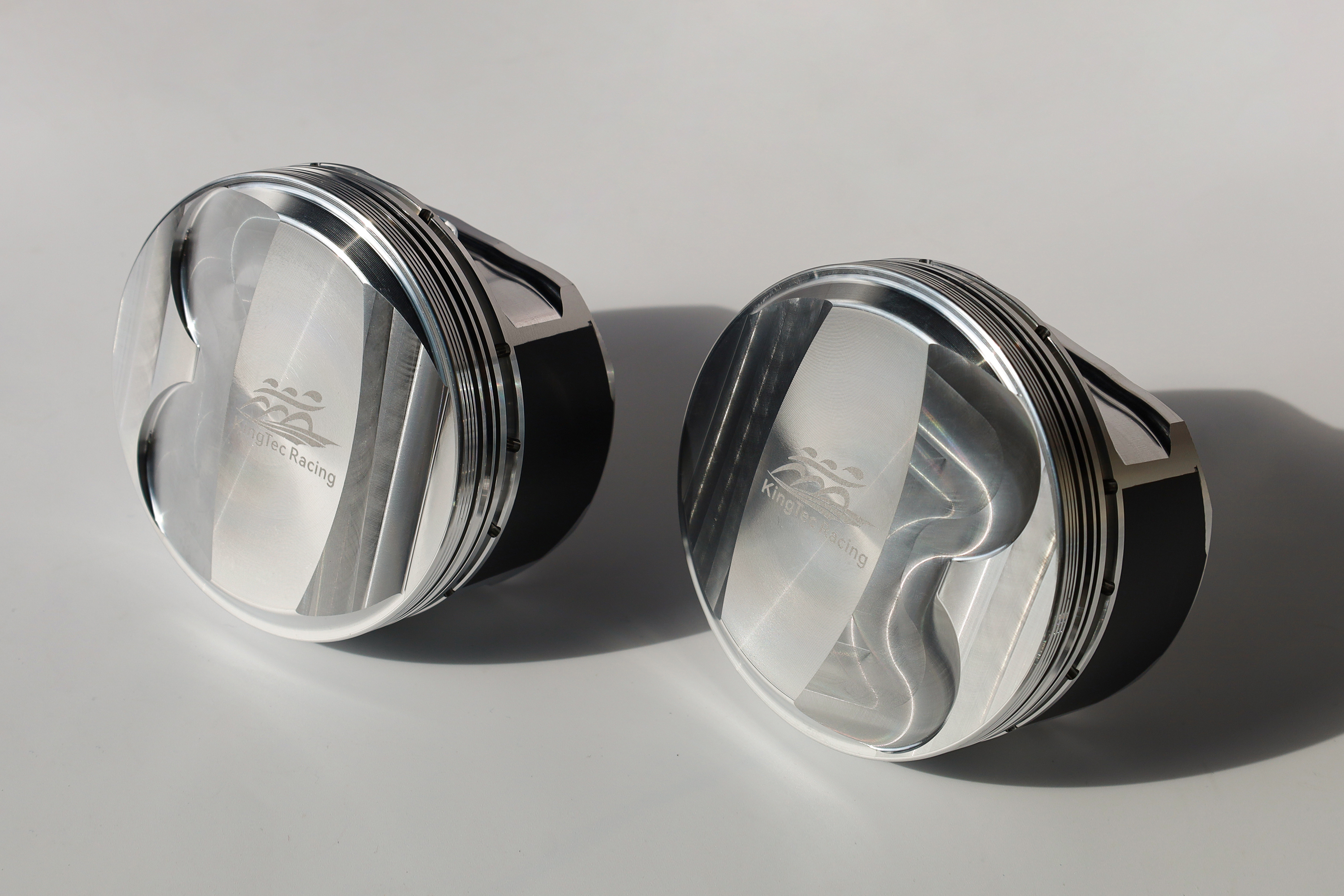
Stock Connecting Rods vs Forged Connecting Rods
While pistons handle the direct force of combustion, connecting rods are responsible for transferring that force from the piston to the crankshaft.
Inside the BMW S85 V10, connecting rods experience some of the highest loads in the entire engine.
During every engine cycle, they must withstand:
With the S85 operating beyond 8,000 RPM, the connecting rods are already working in an extremely demanding environment.
When horsepower increases, the stress level rises significantly.
1. Material Strength and Structural AdvantagesThe biggest difference between stock and forged connecting rods comes from their material structure and manufacturing process.
Factory S85 connecting rods are designed around BMW’s original performance targets. They provide an excellent balance between weight, durability, and production requirements.
However, when engine output increases, the original safety margin becomes smaller.
Forged connecting rods are manufactured through a high-pressure forging process that improves the internal grain structure of the steel.
This creates a stronger component with improved resistance against:
Key advantages include:
The BMW S85’s high-revving design creates unique challenges for connecting rods.
At high RPM, the piston changes direction thousands of times per minute. During this process, the connecting rod experiences enormous acceleration forces.
When forced induction is added, the situation becomes even more demanding.
Supercharger and turbocharged S85 builds create:
Forged connecting rods provide the additional strength required to manage these increased forces.
They are especially valuable for:
Many engine failures do not happen because of one single extreme event. Instead, they occur after thousands of repeated stress cycles.
Every combustion event creates:
Over time, these stresses can weaken engine components.
High-quality forged connecting rods are designed for long-term durability through:
Proper manufacturing also helps maintain:
Why Forged Connecting Rods Matter for BMW S85 Builds
For BMW S85 owners, upgrading connecting rods is not only about achieving higher horsepower numbers. It is about creating a stronger engine foundation capable of handling increased stress over time.
A forged connecting rod upgrade provides:
✓ Increased power capability
✓ Better resistance to high RPM stress
✓ Improved durability under boost
✓ Greater confidence during street and track use
Whether building a supercharged E60 M5, turbocharged E63 M6, or a dedicated racing S85 engine, forged connecting rods are one of the most important upgrades for protecting the bottom end.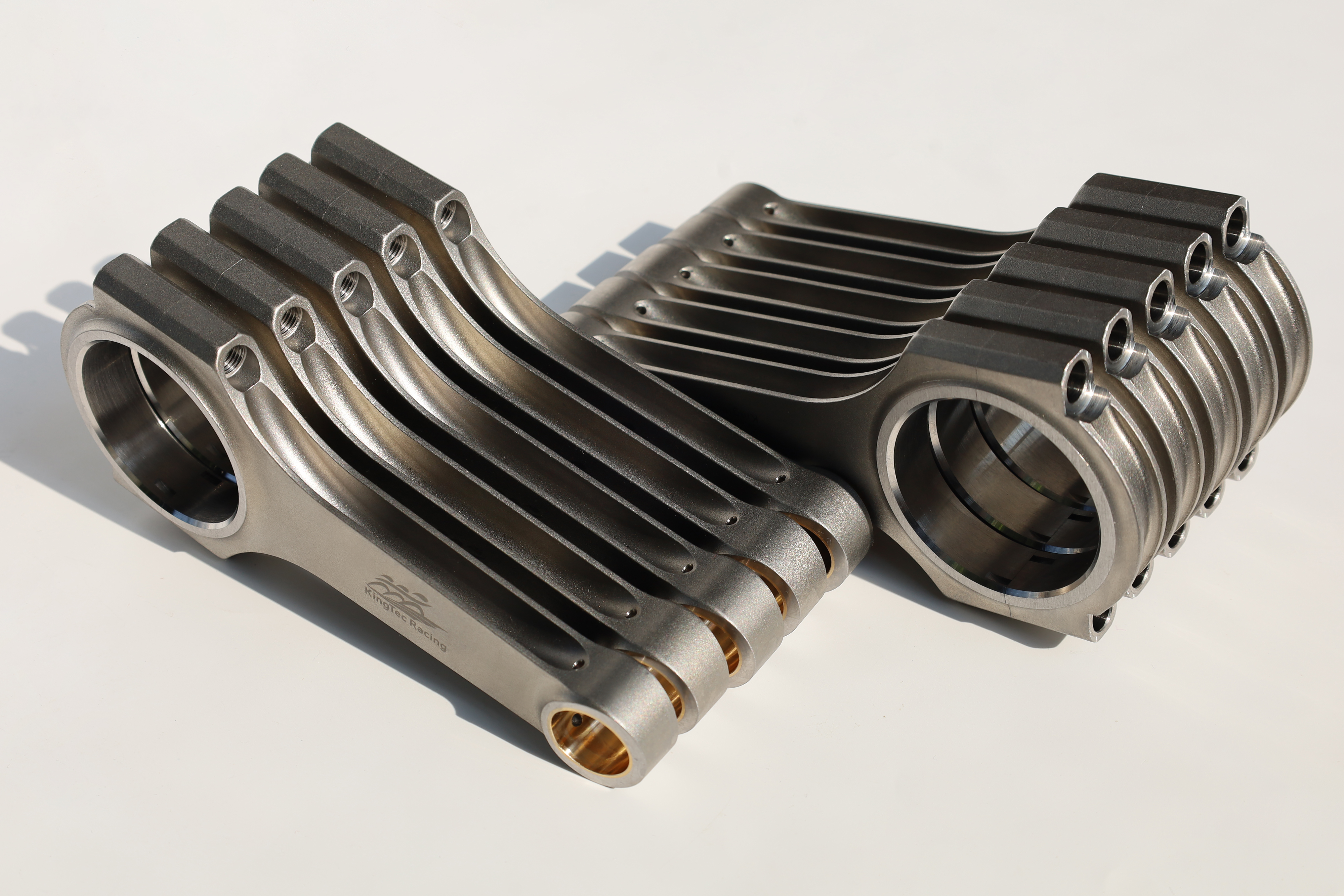
Stock Crankshaft vs Forged Crankshaft: What Are the Key Differences?
Unlike pistons and connecting rods, which directly experience combustion forces, the crankshaft has a different responsibility inside the BMW S85 V10. Its primary job is to convert the linear movement of the pistons into rotational power while maintaining precise alignment throughout the entire rotating assembly.
Because of this role, the crankshaft is constantly exposed to:
The factory S85 crankshaft is already a very strong component. BMW designed it specifically for the engine’s high-RPM characteristics, smooth V10 balance, and long service life. For many naturally aspirated street cars and moderate-performance builds, the OEM crankshaft remains a reliable foundation.
However, when an S85 moves into extreme horsepower territory, the loads placed on the crankshaft increase significantly. At that point, crankshaft strength and stability become important considerations.
1. Material Structure and Manufacturing StrengthThe main difference between a stock crankshaft and a forged crankshaft lies in the manufacturing process and material characteristics.
The factory S85 crankshaft was engineered to provide an excellent balance between performance, durability, and production efficiency. Under normal operating conditions, it is capable of handling the demands of the engine.
A forged crankshaft is produced by shaping high-strength steel under extreme pressure. This process improves the internal grain structure of the material, creating a denser and more uniform component.
Compared with standard crankshafts, forged crankshafts offer:
This additional strength becomes valuable when the engine is operating far beyond its original design parameters.
2. Torsional Strength Under Increased PowerThe biggest challenge for a crankshaft in a high-performance engine is not simply horsepower — it is the increase in torque load.
When a BMW S85 is converted from naturally aspirated operation to forced induction, combustion pressure increases dramatically. The additional force travels through the piston and connecting rod before being transferred into the crankshaft.
This creates higher torsional stress every time a cylinder fires.
A high-strength crankshaft helps maintain:
This becomes especially important for turbocharged S85 builds where torque output can be significantly higher than BMW originally intended.
3. High-RPM Stability and Vibration ControlThe S85’s biggest characteristic is its ability to rev extremely high. Operating above 8,000 RPM places unique demands on the rotating assembly.
At high engine speeds, the crankshaft must manage:
Any excessive flex or instability can affect bearing performance and long-term reliability.
A properly engineered forged crankshaft provides improved structural stability, helping the engine maintain reliability during:
For many BMW S85 builds, replacing the crankshaft is not the first upgrade required.
In most cases, the biggest improvements come from upgrading:
1. Forged pistonsThese components experience the most direct increase in stress when horsepower and cylinder pressure rise.
However, for extreme applications such as:
a forged crankshaft can provide an additional layer of protection.
When combined with forged pistons and forged connecting rods, it creates a complete high-strength rotating assembly designed for extreme performance.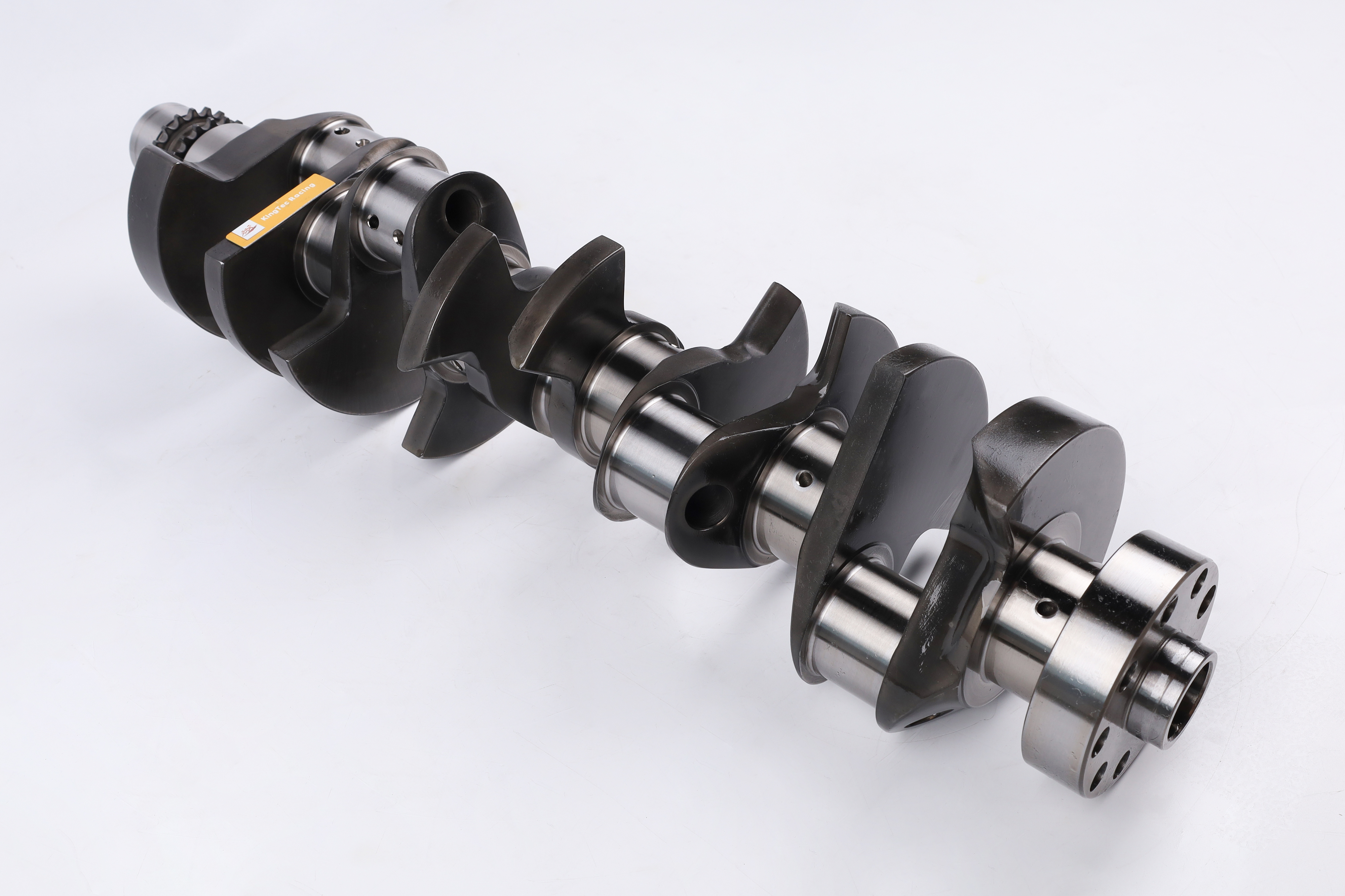
Do You Really Need Forged Internals for Your BMW S85?
Not every BMW S85 owner needs a complete forged engine build.
The right upgrade path depends on how the car will be used and what power level you are targeting.
Stock Internals: Best for Original Performance
For owners who enjoy the factory character of the S85, including:
the original components can provide excellent reliability when properly maintained.
Forged Pistons and Rods: The Most Common Performance Upgrade
For many modified S85 engines, forged pistons and connecting rods provide the biggest improvement.
This setup is ideal for:
The goal is not simply to increase peak horsepower, but to create an engine that can repeatedly handle increased stress.
Full Forged Bottom End: For Extreme Builds
A complete forged internal package becomes valuable when the engine is designed for extreme power.
Applications include:
A complete rotating assembly including:
provides the strongest foundation for pushing the S85 platform beyond factory limits.
Building a high-performance BMW S85 requires more than simply increasing horsepower. The right combination of components, materials, and engineering decisions determines how reliably the engine will perform under real-world conditions.
At KingTec Racing, we specialize in high-performance forged engine components, including:
Our products are developed for demanding applications where strength, precision, and reliability matter. Whether you are building a street-performance E60 M5, a track-focused E63 M6, or an extreme horsepower S85 project, we can provide solutions tailored to your goals.
Ready to take your BMW S85 build to the next level?
Contact KingTec Racing to discuss your engine requirements and build a forged internal package designed for your performance target!


