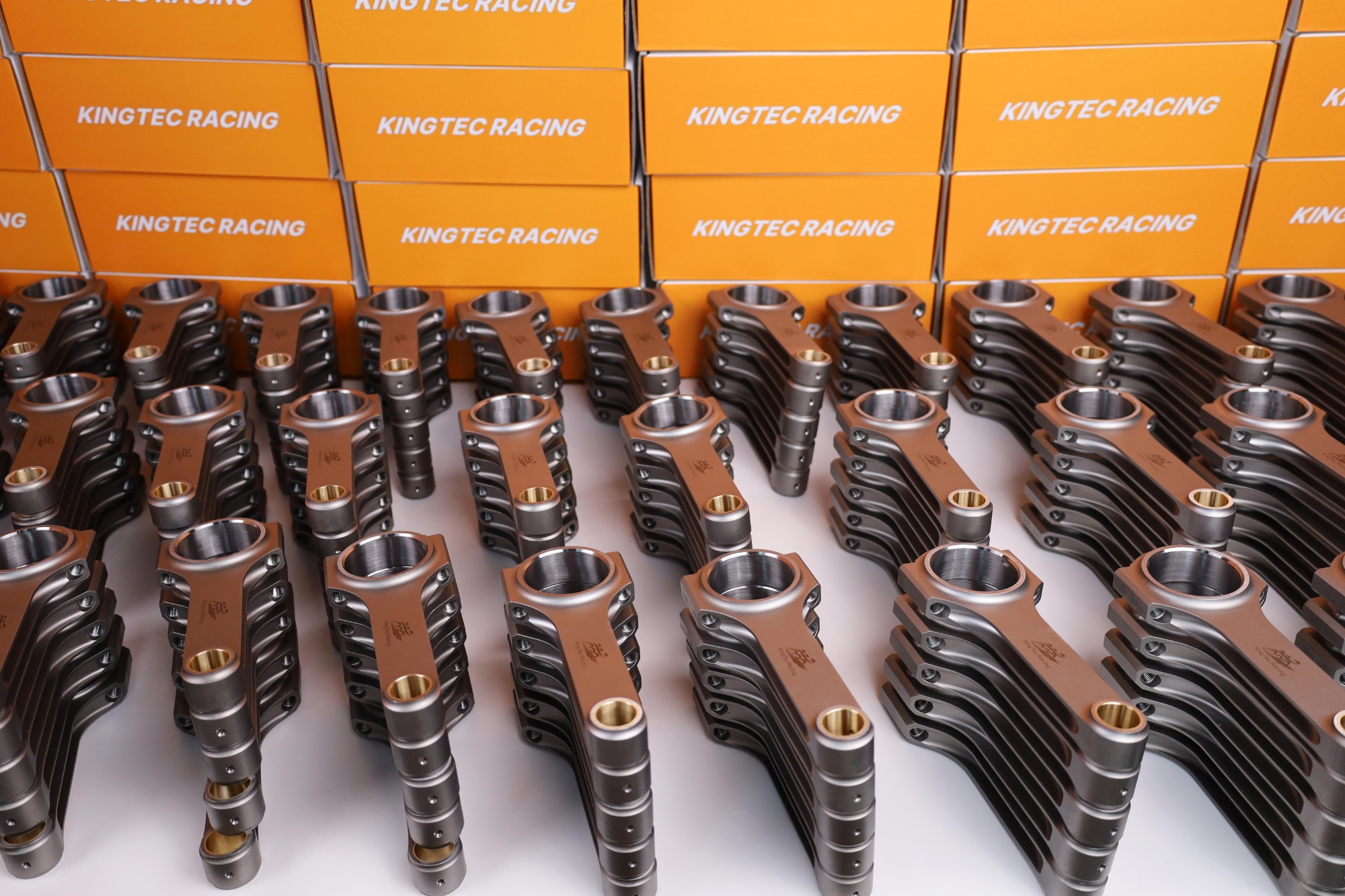
In the realm of high-performance engines, every component plays a vital role in delivering power, endurance, and reliability. Among these components, the forged connecting rod stands as a testament to the pinnacle of precision engineering and unrivaled craftsmanship. In this article, KingTec Racing will delve into the fascinating world of forged connecting rods, illuminating the intricate manufacturing process that sets them apart and makes them the preferred choice for discerning automotive professionals and enthusiasts.
1. Metallurgical Excellence: Selecting the Ideal Materials
The journey towards crafting a superior forged connecting rod commences with the careful selection of premium-grade materials. Typically, high-grade steel alloys such as 4340 are meticulously chosen for their exceptional strength, heat resistance, and fatigue properties. These alloys possess the necessary characteristics to withstand the extreme forces and temperatures encountered within high-performance engines.
2. Forging: Precision Shaping for Enhanced Structural Integrity
The hallmark of forged connecting rods lies in the forging process, where raw materials are transformed into components of superior strength and structural integrity. Through a controlled heating process, the chosen steel alloy is carefully brought to an optimal temperature and then subjected to immense pressure within a forging press. This procedure refines the grain structure, ensuring a homogeneous composition and eliminating potential weak points, thus enhancing the overall performance and durability of the connecting rod.
3. Machining Expertise: Crafting Precision and Perfection
Following the forging stage, the connecting rods undergo meticulous precision machining. Advanced Computer Numerical Control (CNC) machines are employed to remove any excess material, creating flawlessly smooth surfaces and achieving precise dimensions. This intricate machining process guarantees that the connecting rods adhere to the most stringent tolerances, allowing for optimal fitment and superior performance in demanding engine environments.
4. Shot Peening: Elevating Strength and Endurance
To further fortify the strength and fatigue resistance of forged connecting rods, a specialized process known as shot peening is employed. During shot peening, the connecting rods are bombarded with small metal pellets, inducing compressive stresses onto their surfaces. This treatment induces a state of controlled residual stress, which significantly enhances the component's resistance to fatigue, thereby prolonging its lifespan under the most strenuous conditions.
5. Heat Treatment: Forged in the Crucible of Reliability
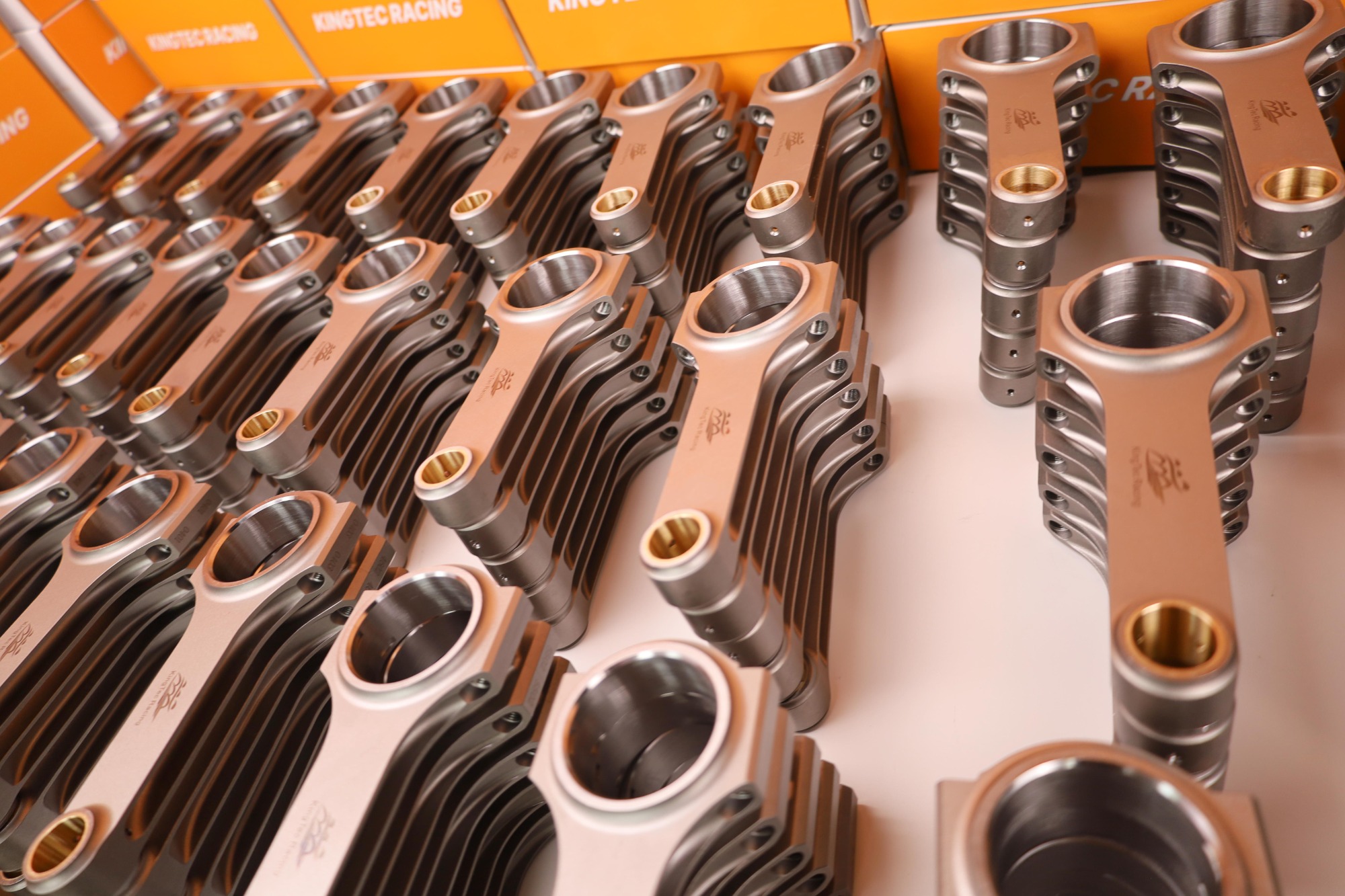
Heat treatment, a critical phase in the manufacturing process, imparts unparalleled strength and toughness to the connecting rods. Through carefully calibrated heating and rapid cooling cycles, known as quenching and tempering, the connecting rods achieve the desired hardness and mechanical properties. This meticulous heat treatment ensures that the connecting rods possess the requisite strength to withstand the extreme forces and stresses encountered during engine operation, thereby guaranteeing long-lasting reliability.
6. Precise Balancing: Harmony in Motion
Achieving optimum balance is paramount for seamless engine operation, minimizing vibrations and reducing stress on the crankshaft and bearings. Every forged connecting rod undergoes meticulous balancing to ensure uniform weight distribution. This painstaking attention to detail ensures harmonious performance, allowing the engine to reach higher RPMs effortlessly while maintaining superior smoothness and reliability.
7. Stringent Quality Control: Exceeding Expectations
Prior to reaching the hands of automotive professionals, each forged connecting rod from KingTec Racing undergoes rigorous quality control measures. Advanced non-destructive testing techniques, including magnetic particle inspection and ultrasound evaluation, are employed to detect any potential flaws or defects. These meticulous tests guarantee that only connecting rods of the highest quality, precision, and reliability are integrated into the engines of performance vehicles.
Forged connecting rods are a testament to precision engineering and performance-driven design. Whether you are a professional engine builder or an automotive enthusiast seeking uncompromising performance, forged connecting rods provide the assurance of top-tier quality.
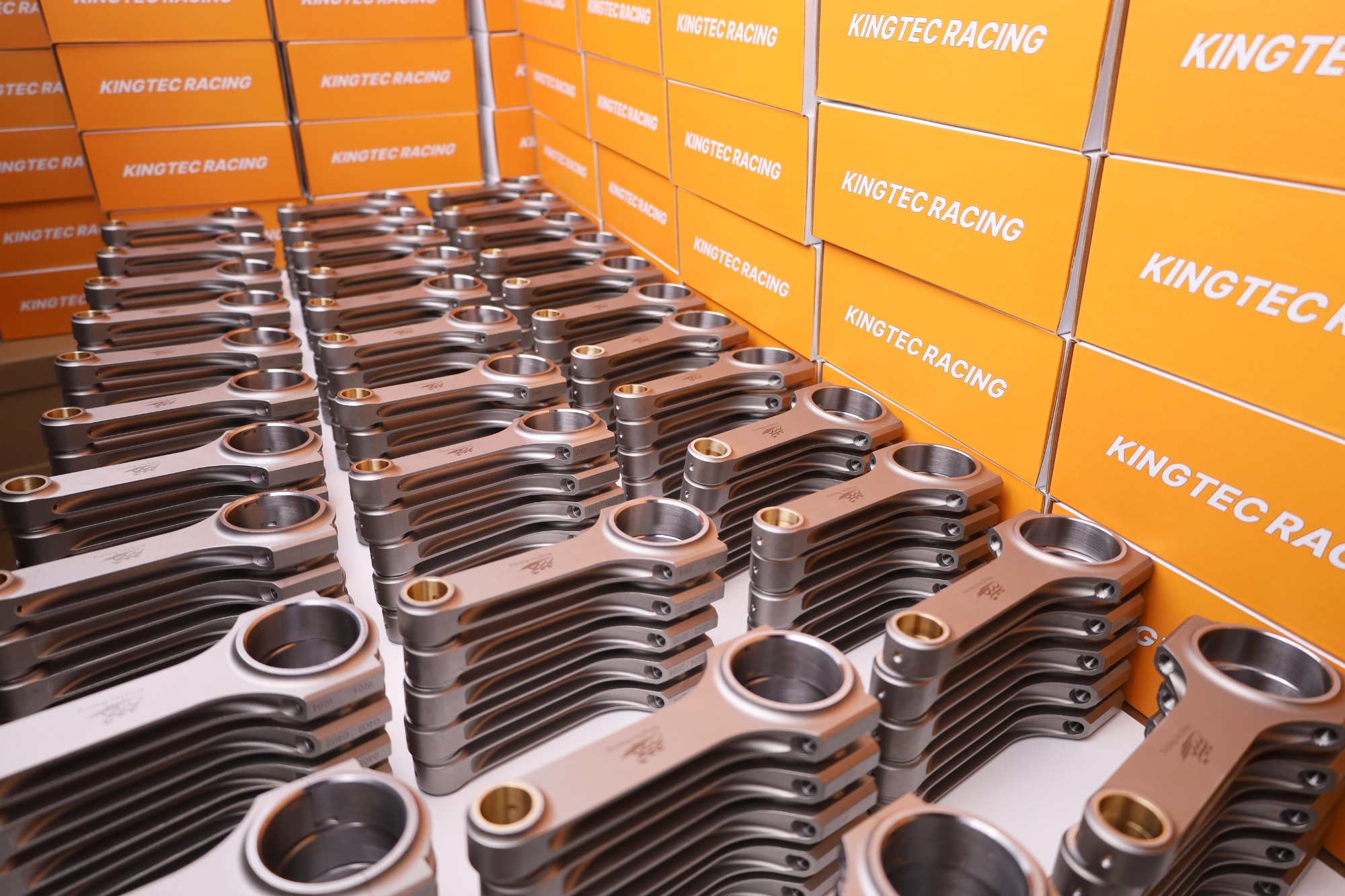 KingTec Racing has been a trusted provider of high performance forged connecting rods for a wide range of racing enthusiasts. Our extensive product lineup caters to various engine platforms, including the Toyota 2JZ and 1NZ, BMW N54 and N55, Honda K20 and K24, VW 1.8T 20V and 2.0 TFSI, Mitsubishi 4G93 and 4G63, etc. With a commitment to uncompromising quality and precision, Kingtec Racing ensures that our forged connecting rods not only meet but exceed the expectations of even the most demanding racers. Embrace the power of precision and elevate your engine's performance with KingTec Racing high performance forged connecting rods!


