When it comes to building a high-performance engine, choosing the right forged connecting rods is crucial. A well-selected set of connecting rods can mean the difference between an engine that withstands extreme conditions and one that fails under pressure. However, picking the ideal forged connecting rods isn’t as simple as just grabbing the strongest option available. There are multiple factors to consider, including your engine’s application, power goals, RPM range, and material selection.
Key Considerations When Choosing Performance Connecting Rods
1. Engine Type and ApplicationThe type of engine you are building plays a significant role in determining the best connecting rods for your needs. Different racing disciplines and performance goals require different rod designs and materials:
Drag Racing (Short Bursts of High Power)
The forged connecting rods you choose must match your engine’s horsepower and torque output.
High-RPM, High-Horsepower Builds (8,000+ RPM)
High-Torque, Low-RPM Builds (Big-Displacement Engines)
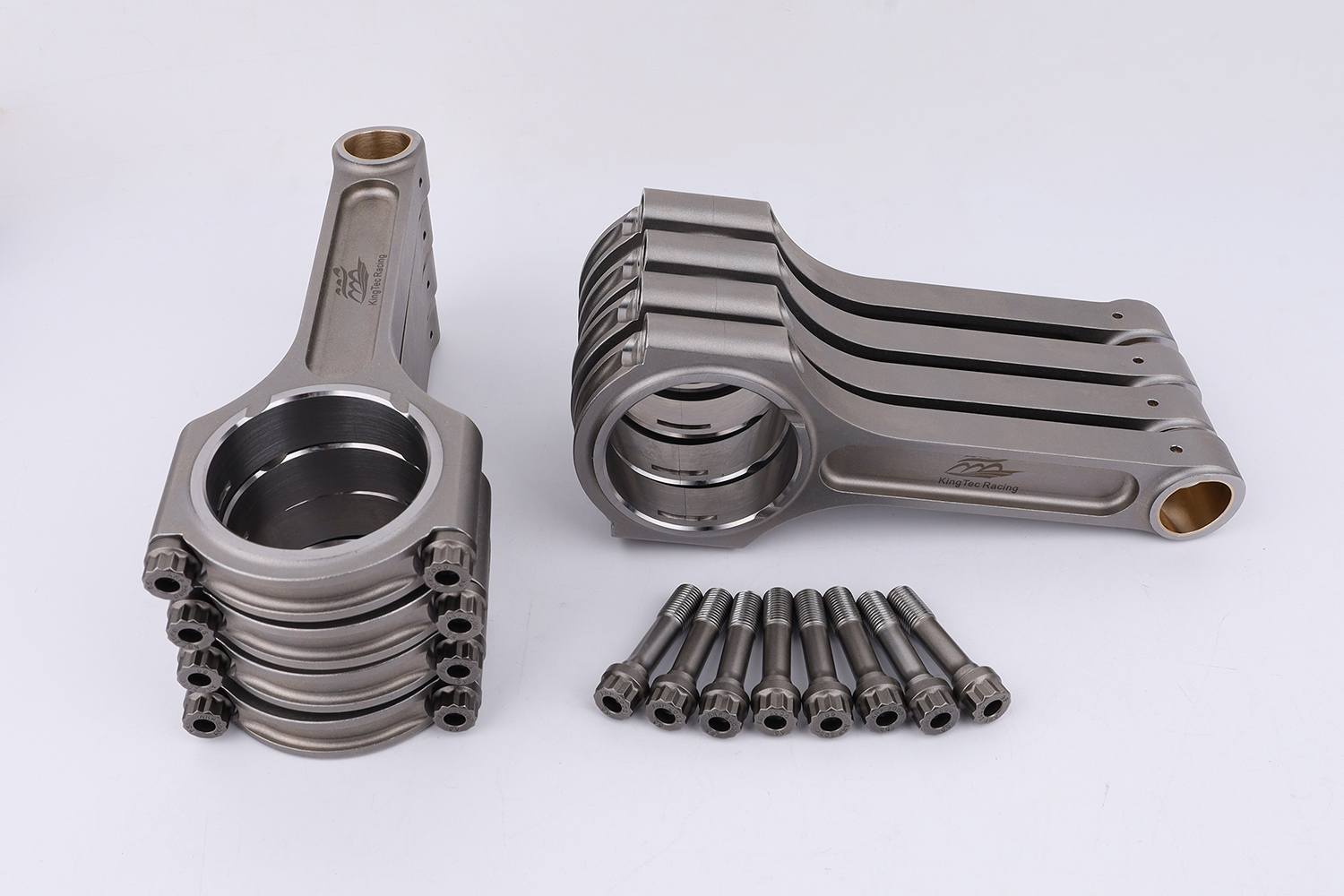
Choosing the right connecting rod design is essential for achieving the best balance of strength, durability, and performance in a high-performance engine. Each design—X-beam, I-beam, and H-beam—has unique characteristics that make it suitable for different applications.
X-Beam Connecting Rods: Optimized Stress Distribution for High-RPM Engines
Best for: High-RPM racing engines, endurance builds, and high-horsepower street applications.
X-beam forged connecting rods are designed to distribute stress more evenly across the rod structure, reducing the risk of localized failure. This design excels in high-RPM applications where the rods must withstand repeated high-stress cycles over extended periods. X-beam rods are commonly used in circuit racing, time attack, and high-revving naturally aspirated or turbocharged engines. Their structural efficiency makes them a strong contender for applications requiring consistent performance under prolonged high-load conditions.
I-Beam Connecting Rods: Maximum Rigidity for Extreme Torque Applications
Best for: High-boost, high-displacement, and extreme torque applications.
I-beam forged connecting rods are known for their exceptional rigidity and resistance to bending. This makes them ideal for forced induction engines, big-displacement builds, and drag racing applications where high torque loads and extreme cylinder pressures are present. While they may not be as commonly used in high-RPM endurance racing, their ability to handle extreme forces makes them the preferred choice for turbocharged, supercharged, and nitrous-fed engines that prioritize strength over anything else.
H-Beam Connecting Rods: A Versatile Choice for Strength and Efficiency
Best for: Turbocharged street builds, moderate-boost racing applications, and well-balanced performance engines.
H-beam forged connecting rods provide a strong and efficient structure that performs well in a variety of applications. They offer a good balance between strength and weight distribution, making them suitable for high-boost turbo builds, street performance engines, and competition vehicles that require both durability and flexibility. While they are often seen as a middle ground between I-beam and X-beam designs, H-beam rods are widely used due to their reliability and adaptability in different engine setups.
At KingTec Racing, we manufacture X-beam, I-beam, and H-beam forged connecting rods, ensuring every build gets the right components for peak performance. Whether you’re chasing RPM, torque, or overall balance, our precision-engineered rods provide the durability and strength your engine needs to perform at its best.
The material you choose for your connecting rods plays a crucial role in determining the strength, weight, durability, and cost of your engine components.
4340 Forged Steel: Strength and Reliability at an Affordable Price
Best for: High-performance street engines, drag racing, endurance racing, and most racing applications.
4340 forged steel is the most commonly used material for connecting rods in high-performance racing engines due to its strength, durability, and cost-effectiveness. This material provides excellent performance under high-stress conditions while remaining relatively affordable. For most racers, 4340 is the go-to choice that offers a perfect balance between performance and cost.
300M Steel: Unmatched Strength for Extreme Builds
Best for: High-boost, nitrous, and extreme racing engines.
For extreme horsepower builds where durability and fatigue resistance are paramount, 300M steel is the material of choice. Known for its superior strength and fatigue resistance over 4340, 300M is ideal for high-boost turbocharged, nitrous-powered, and other extreme racing applications. This steel is perfect for engines that push the limits of power and RPM, ensuring the connecting rods will stand up to the immense stresses generated in high-performance racing environments.
Titanium: Lightweight and High-Performance for Specialized Applications
Best for: Formula 1, endurance racing, and high-end, high-RPM engines.
Titanium is the lightest material used for connecting rods, making it ideal for high-RPM motorsport applications where reducing reciprocating mass is a critical factor. While titanium rods offer incredible strength-to-weight ratio, they are cost-prohibitive for most builds and are typically reserved for Formula 1, endurance racing, and ultra-high-performance builds. While not the most common material for everyday racing engines, titanium rods are used in some of the most elite applications where performance is prioritized above all else.
When it comes to connecting rods, off-the-shelf options provide a convenient and cost-effective solution for many racing engines. However, for highly specialized builds or engines with unique specifications, custom connecting rods are often the best choice.
Ready-Made Connecting Rods: Affordable & Convenient
Best for: Popular engines with standard specifications.
The off-the-shelf connecting rods are designed to fit a wide range of popular engines like the VW, BMW, Audi, Toyota, Honda and many others. These rods are made from high-quality 4340 forged steel, offering strength and reliability for most street performance, drag racing, and endurance applications. Ready-made rods are an affordable solution for those working with common engine platforms and standard configurations, providing ease of installation without the long wait times or higher costs associated with custom designs. These rods are pre-engineered for engines with standard stroke, piston height, crankshaft journal diameter, and wrist pin size—making them the ideal choice for many racers and enthusiasts.
Custom Connecting Rods: Precision Tailored for Unique Builds
Best for: Stroker kits, high-power racing applications, and uncommon engine platforms.
For more complex or custom builds, KingTec Racing provides custom connecting rods designed to meet the exact specifications of your engine. Whether you are working with a stroker kit, a high-boost racing engine, or a unique engine platform, we can customize connecting rods to fit your engine's specific stroke, piston height, crankshaft journal diameter, and wrist pin size. Custom rods are perfect for engines with non-standard dimensions or specialized performance goals, such as big-displacement engines that need additional strength to handle extreme torque or high-RPM applications that require superior durability. By selecting custom connecting rods, you ensure that every aspect of your build—whether it's optimizing rod ratio or aligning with piston and crankshaft specifications—is perfectly matched to your engine's needs.
Choosing the right forged connecting rods is a critical step in building a reliable, high-performance engine. By considering factors like engine type, power goals, RPM range, rod material, and design, you can ensure your engine stays strong under extreme conditions.
At KingTec Racing, we offer top-tier forged connecting rods designed to handle the demands of drag racing, circuit racing, street performance, and more. Ready to upgrade your engine’s internals? Explore our forged connecting rods lineup today!